West Life Data Pilot
 This presentation gives an overview of the West Life data pilot

 This presentation gives an overview of the West Life data pilot
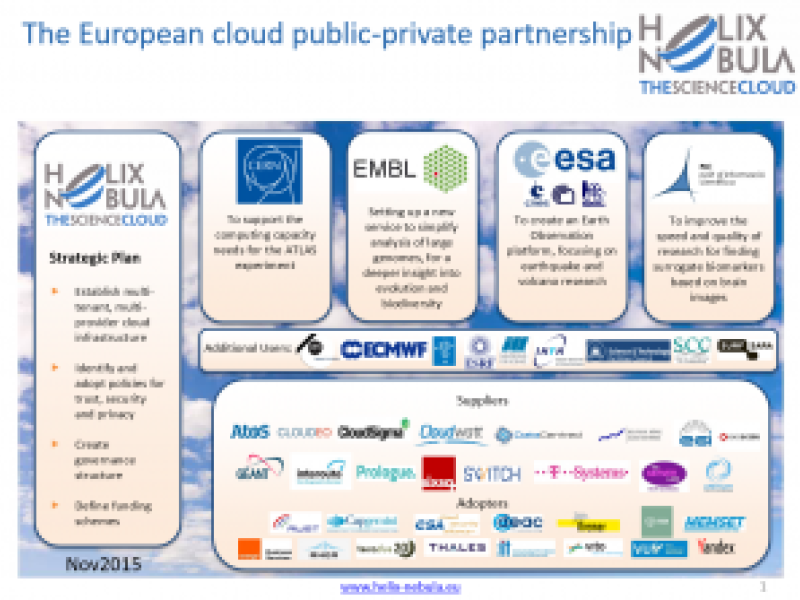
Presentation by Jurry de la Mar, T-Systems International Gmbh during the "From vision to implementation" panel session at the European Open Science Cloud for Research (EOSC) Workshop, 5th Feb 2016, Rome, Italy.

We have listed below all the major EUDAT workshops and events that took place in September 2016. Click on the event title to find more about the main outcomes. EUDAT training session at the "…
8 September 2016
This document presents the outline of the stakeholders targeted by EUDAT, defining different potential levels of engagement and outlining the different communication and outreach plans for each stakeholder, including details of the training programme, action plans and implementation steps. Detailed KPIs and metrics will be provided to monitor the effectiveness of the plan.

The European Commission has successfully reviewed the proposal for the EOSC-hub project, submitted at the end of March 2017 as a Research Innovation Action to the H2020-EINFRA-12-2017(a) call, which i…
2 August 2017